Purée, paste and thick sauce can change viscosity through the heating cycle. A meaningful equipment enquiry includes how the product flows at the inlet and at process temperature. Tube-in-tube selection brings rheology, heat transfer and pump duty into the same configuration review.
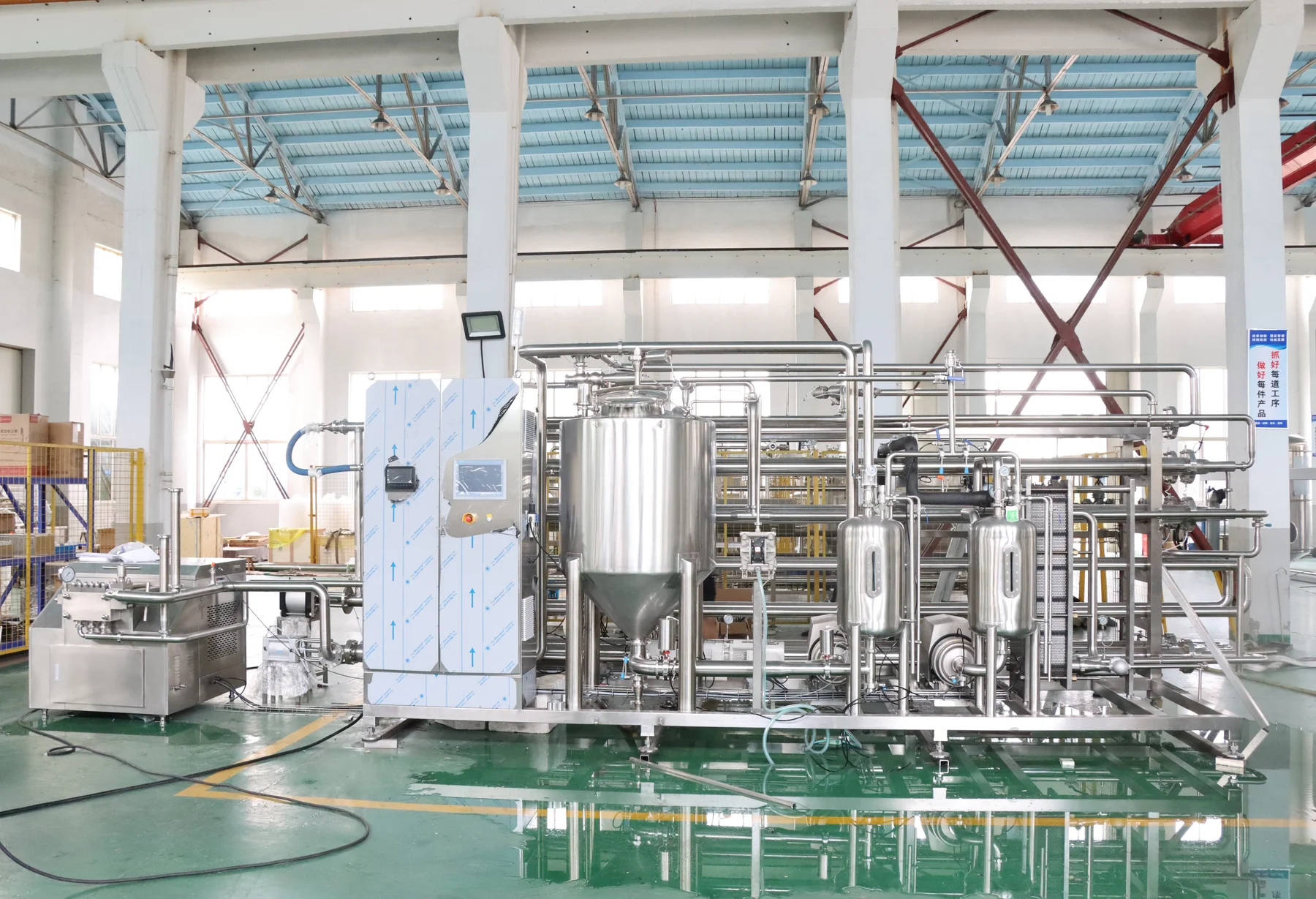
Tube-in-tube sterilizer equipment photograph. Configuration and included modules are specified for your product. Scroll the diagram horizontally to inspect it.
Configuration priorities
What to specify for this duty.
01
Measure the product under useful conditions
Include the test temperature, measurement method and formulation range with every viscosity value. A room-temperature reading alone may not describe the heating section. Sugar, fibre, solids and shear sensitivity can affect the flow behaviour. Include the thickest product you intend to run.
02
Review pumping and pressure together
Nominal throughput does not establish a suitable pump or passage. The feed arrangement must account for inlet conditions and the pressure required through the equipment. Share restrictions from upstream tanks and downstream equipment. A pressure-drop review helps identify where the design needs product-specific attention.
03
Consider quality and operating time
Define the texture, colour and particle integrity you want to retain. Fouling and burn-on can limit useful run length and influence cleaning access. If the formulation is particularly difficult, compare a scraped-surface architecture rather than assuming that a tubular system is always the best fit.
A useful first enquiry
Bring the product. We’ll discuss the equipment.
You do not need every value to start. Share what is known and identify what needs review. A clear product brief helps define configuration, included modules and the decisions that affect the quotation.
Viscosity with temperature and test method
Solids, Brix, density and formulation range
Shear sensitivity and quality targets
Operating hours, fouling observations and cleaning needs
Practical answers
Before you specify.
Is there a universal viscosity limit?
No site-wide limit is stated. Geometry, flow behaviour, pressure, heat duty and cleaning determine the viable operating envelope.
When should I compare scraped-surface equipment?
Compare it when viscosity, heat sensitivity or surface fouling make an indirect tubular passage difficult to operate. The product review should establish the fit.
Discuss your equipment
From product requirements to a defined scope.
Send your product, target flow and packaging needs. The equipment quotation should identify what is included, what connects to your existing line and which process values still need confirmation.
Compare tube-in-tube and scraped-surface heat exchangers for viscous food using wall fouling, shear, particles, pressure drop, cleaning and maintenance.
Define nominal and minimum flow for tube-in-tube sterilizer sizing. Review product viscosity, holding, pressure drop, utilities and the downstream line balance.