Tube-in-Tube Sterilizer Trials Need a Defined Product Envelope
Plan a tube-in-tube sterilizer trial around formulation, particles, rheology, flow and thermal evidence instead of a product name or catalogue range.
Read the analysisNews / editorial analysis
Original analysis for teams specifying tube-in-tube sterilization equipment. Each note starts with a concrete engineering question, cites its sources and keeps equipment capability separate from a validated product process.
Latest / 28 October 2026
The first note defines the product envelope a trial needs. The second follows the aseptic boundary downstream from the holding tube. Both are editorial analysis, not claims about a customer installation or a guaranteed process.
Plan a tube-in-tube sterilizer trial around formulation, particles, rheology, flow and thermal evidence instead of a product name or catalogue range.
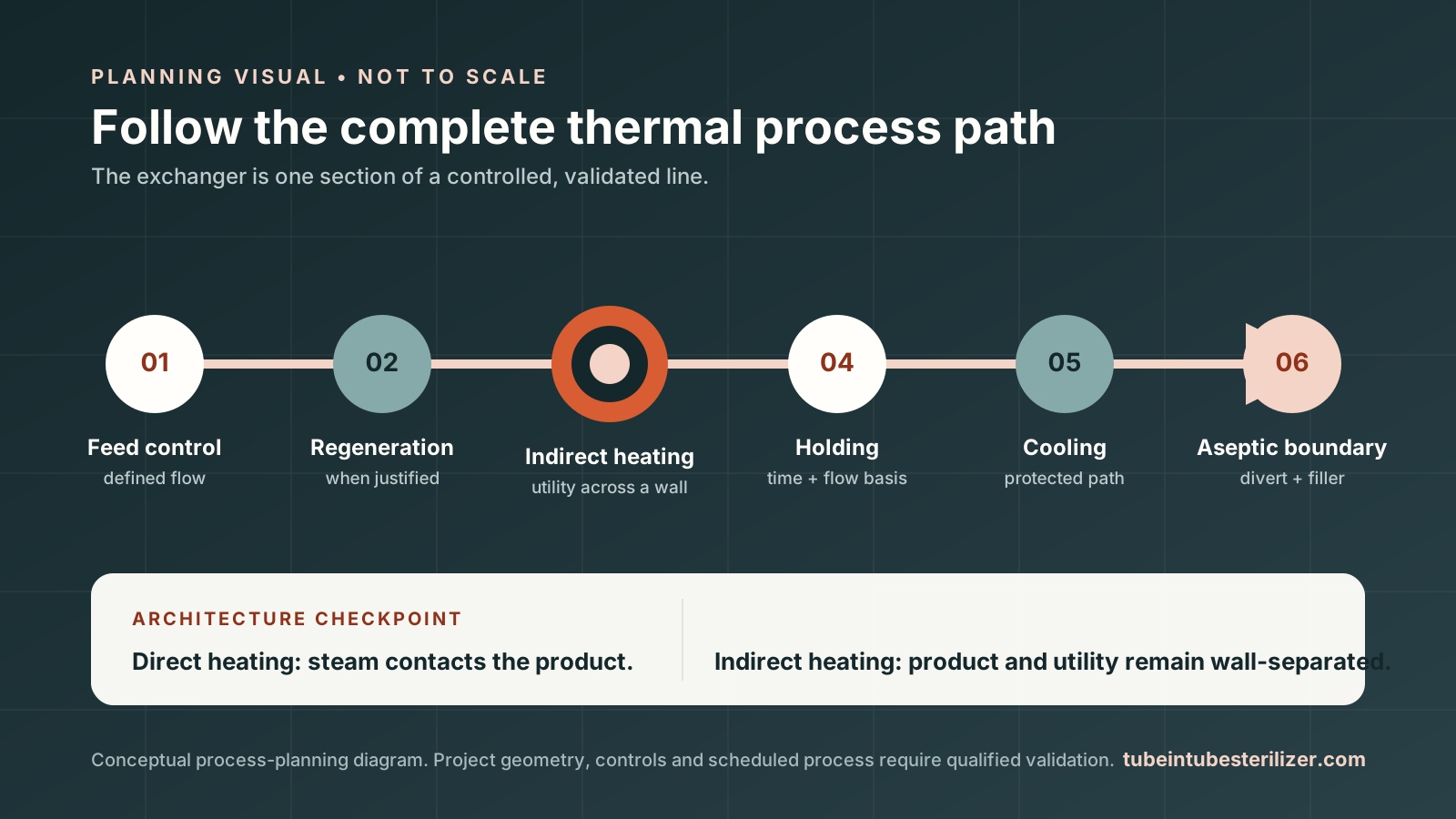
Read the analysisMap the aseptic boundary from holding tube through cooling, diversion, surge and filling, and assign the evidence and restart authority it needs.
Read the analysisEditorial boundary
Editorial analysis here is written for equipment and process teams. The articles use public regulatory guidance and engineering reasoning to frame questions for a project review. They do not publish a universal sterilization schedule, a guaranteed shelf life or a customer result.
Where a product-specific process is required, the responsible process authority establishes it for the formulation, flow, holding geometry, sterile zone and package. Equipment selection and process validation remain connected but distinct decisions.
Read the sources linked in each article, then use the selection guide to prepare the product and line inputs for a technical conversation.
Prepare the equipment briefMake the next review specific
Share the formulation, flow range, thermal question and downstream packaging route. The review can then identify the equipment and evidence still needed.
Request a process review